Horse welfare in equestrian sport: what can you do legally?
If you suspect that a horse is being mistreated or neglected, you have more options than simply filing a report. An overview.
Written by


Equestrian sport is a wonderful discipline, but the welfare of the horse does not always come first. Anyone who suspects neglect, mistreatment or abuses in training often wonders what they can do about it. There are several routes, each with its own purpose and its own rules.
The legal framework
In the Netherlands, animal protection is governed by the Animals Act (Wet dieren). Among other things, it prohibits causing an animal pain or injury, or harming its health or welfare, without a reasonable purpose or beyond what is permissible. The duty of care for the animal is also laid down in law. Breaches can lead to administrative measures and criminal prosecution. Germany has a comparable framework in the Animal Welfare Act (Tierschutzgesetz).
Reporting to the authorities
Anyone who suspects abuse can report it to the bodies that supervise animal welfare, in the Netherlands for instance via the national hotline 144 Red een Dier. Filing a report is straightforward, but the person reporting has no influence over what happens next. A well-documented report, with dates, photographs and a description of what was observed, is more effective.
Disciplinary rules in the sport
Where the abuse occurs in organised sport, the disciplinary system of the governing body can also be engaged. The Dutch equestrian federation (KNHS), the German FN and the international federation FEI all have rules on the welfare of the horse during competition and training, and on doping and medication. A complaint can lead to sanctions against the rider or the person responsible. Disciplinary law has its own procedures and time limits.
Civil law options
If you own a horse that is in someone else's care or training, you can take your horse back and hold the carer to the agreement. If your horse has been harmed, you can claim damages. In urgent cases, summary proceedings (kort geding) may offer a solution, for instance to compel the return of a horse.
What makes a case strong?
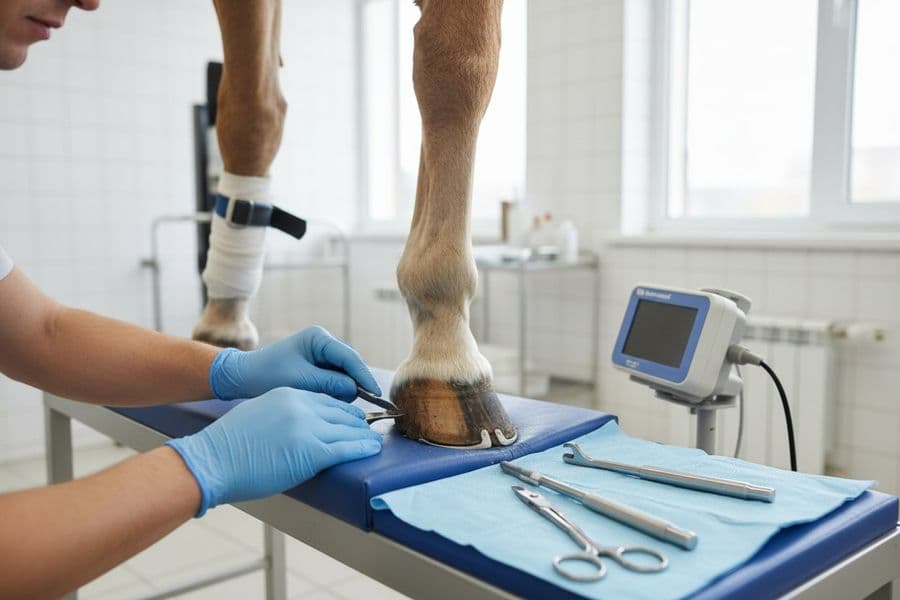
Whether you opt for a report, a disciplinary complaint or civil proceedings, documentation is decisive. Note dates and times, take photographs or videos where this can be done lawfully, keep messages and ask a vet to record his findings. The more concrete the picture, the greater the chance that something will actually change for the horse.
The other side
An allegation of animal cruelty has serious consequences for the reputation of a rider, yard or dealer. Those who are wrongly accused have rights too. We act both for people reporting abuse and for owners, as well as for riders and yards facing an allegation or disciplinary case.
Our background
Our specialists are active in equestrian sport themselves and have held board positions in the equestrian sector, including at the Stichting Veilige Paardensport (Foundation for Safe Equestrian Sport). They know the sport and its organisations from the inside, in the Netherlands and in Germany.
This article contains general information and does not constitute legal advice. Legislation and case law may change, and the outcome always depends on the circumstances of your situation. For advice on your matter, please get in touch with us.