Doing business in Germany: GmbH, AG or branch?
Anyone starting operations in Germany has to decide how. An overview of the usual structures and the choices that come with them.
Written by
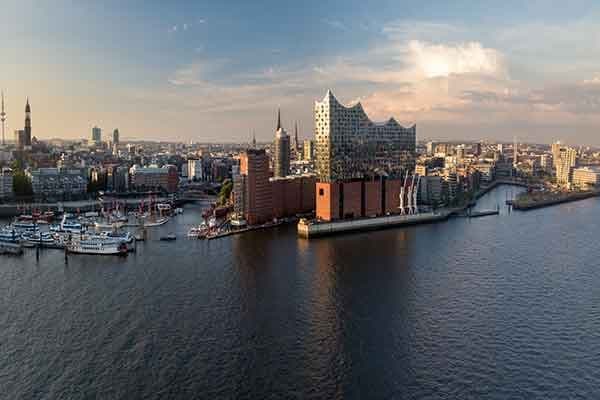
For many Dutch companies, Germany is the most important export market. Once you start operating there on a permanent basis, the question soon arises of which structure to use. The choice affects liability, tax, management and administration. Here is an overview of the usual options.
The GmbH
The Gesellschaft mit beschränkter Haftung is the German counterpart of the Dutch B.V. (private limited company) and the most popular form for a German subsidiary. The statutory minimum share capital is 25,000 euros, of which at least half must generally be paid up on incorporation. The articles of association (Gesellschaftsvertrag) must be executed before a notary, and the company only comes into existence once it is entered in the commercial register (Handelsregister). A GmbH is managed by one or more managing directors (Geschäftsführer), who are bound by strict duties, not least when insolvency looms.
The UG (haftungsbeschränkt)
For smaller ventures there is the Unternehmergesellschaft, a variant of the GmbH with lower start-up capital. A UG must set aside part of its profits until it reaches the capital of a GmbH. For the subsidiary of an established Dutch company this form is less obvious, as business partners and banks often prefer a GmbH.
The AG
The Aktiengesellschaft is intended for larger companies and has a minimum share capital of 50,000 euros. Its hallmark is a two-tier board structure with a management board (Vorstand) and a mandatory supervisory board (Aufsichtsrat). An AG involves more formalities and is chosen less often by Dutch companies, unless there are concrete plans for a stock market listing or a broad circle of shareholders.
A branch without separate legal personality
It is also possible to operate in Germany without a separate company, through a branch (Zweigniederlassung) of the Dutch B.V. Such a branch is entered in the German commercial register but is not a legal entity in its own right. The Dutch company itself is therefore liable for the branch's obligations. For tax purposes, the branch may constitute a permanent establishment in Germany, with its own filing obligations.
What else should you consider?
Beyond the choice of legal form, there are questions about the transparency register (Transparenzregister), the licences required for your activities, the employment contracts of German staff and the tax structure. These questions are interlinked. A structure that is simple from a legal point of view may turn out to be unfavourable for tax, and vice versa. It is therefore wise to coordinate the choice with your tax adviser, both in the Netherlands and in Germany.
Our approach
We start by discussing with you what you want to achieve in Germany, what risks you face and how long you expect to be active there. On that basis, we advise on the most suitable structure and guide the incorporation together with a German notary. Because our firm includes Rechtsanwälte, you can continue to turn to us with questions on German corporate law after incorporation, too.
This article contains general information and does not constitute legal advice. Legislation and case law may change, and the outcome always depends on the circumstances of your situation. For advice on your matter, please get in touch with us.